
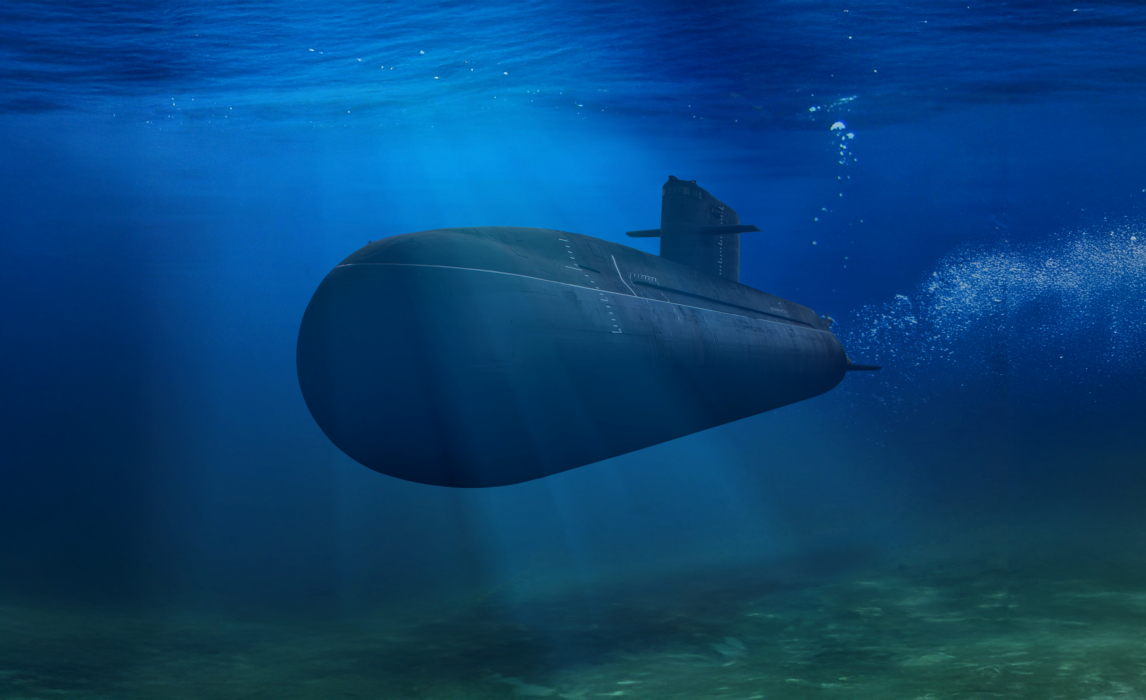
In defense environments, reliability, security, and adaptability are non-negotiable. But conventional systems often struggle with range, resilience, and stealth limitations.
New technologies, including vector sensors, beamforming, and hybrid modes, are changing the equation. Here are three key challenges and the innovations designed to solve them.
Challenge 1

"My signals fade over distance"
In open-ocean and long-range operations, conventional hydrophones and RF communication systems suffer from signal attenuation, restricting detection and connectivity to relatively short distances, often just a few kilometers.
As a result, offshore assets, patrol vessels, and distributed sensor networks can be left with critical coverage gaps and reduced situational awareness.
What is the solution?
Vector sensors combined with beamforming focus acoustic or electromagnetic energy into highly directional beams, extending communication range by 2-5×. By coherently combining signals from multiple sensors, beamforming:
- Amplifies weak signals while suppressing noise.
- Maintains signal clarity over longer distances, even in harsh environments.
- Reduces power consumption compared to conventional amplification methods.
Real-world example:
While a conventional hydrophone is limited to a 10 km range, a vector sensor can achieve up to 30 km, making secure links between offshore assets and patrol vessels possible.
Beyond extending communication range, vector sensors enable earlier detection of submarine and surface threats, enhance maritime domain awareness through distributed sensor networks, and support reliable command-and-control (C2) across dispersed forces.
Challenge 2
"My underwater communications are easy to jam or intercept"
Underwater acoustic communications are inherently vulnerable to jamming, interception, and spoofing in contested environments.
Traditional omnidirectional hydrophones capture sound from all directions, making them susceptible to intentional interference and deceptive signals. The result is reduced communication security and reliability for submarines, UUVs, and other underwater assets.
What is the solution?
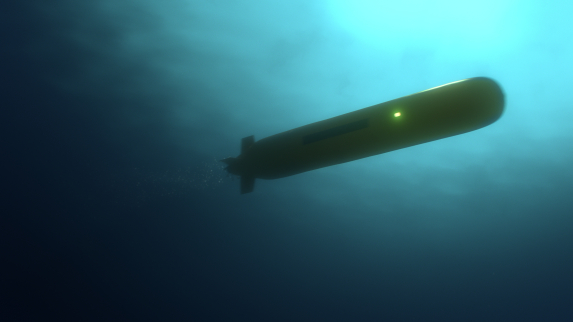
- Directional acoustic reception: Unlike omnidirectional hydrophones, vector sensors isolate signals within narrow directional paths, much like a telephoto lens focuses on a distant subject. This helps filter out ambient noise and jamming while enabling discreet monitoring of specific sources, such as a UUV.
- Frequency agility: Techniques such as frequency-hopping rapidly shift transmissions across a wide bandwidth, making it significantly harder for adversaries to jam or intercept communications.
- LPI (Low Probability of Intercept) and security: Short-burst transmissions and adaptive power control reduce the risk of detection, while military-grade encryption safeguards data integrity and confidentiality.
Real-world example:
In a high-threat environment, two submarines can exchange tactical data while minimizing the risk of detection. By combining directional reception to reject interference, frequency-hopping to counter jamming, and LPI techniques to reduce their acoustic signature, they can maintain a resilient and highly secure communication link.
This approach supports secure submarine-to-submarine messaging, even in contested waters where adversaries may attempt to disrupt or intercept communications.
Challenge 3
"Why can't I have stealth and speed?"
Stealth and bandwidth have traditionally been at odds. Active systems, such as radar and active sonar, can provide fast, high-resolution data but risk revealing an asset's position. Passive systems, including hydrophone arrays, offer greater discretion but often lack the speed and data throughput needed for real-time operations.
Modern defense missions demand both: the ability to remain undetected while rapidly transmitting and accessing critical information when it matters most.
What is the solution?
Hybrid passive/active systems dynamically switch between two operating modes:
- Passive mode: Silent listening for threat detection, surveillance, and intelligence gathering.
- Active mode: Brief, high-speed transmissions for data exchange or target illumination, carefully limited to minimize exposure.
This approach relies on adaptive duty cycling, activating systems only when needed, such as during data transfers or fire-control operations. Directional active pings further reduce detectability by focusing transmissions into narrow beams rather than broadcasting in all directions. In addition, AI-driven automation can switch between modes based on threat levels, mission objectives, and operational priorities.
Real-world example:
A special operations team operating in hostile territory can use passive mode to monitor enemy activity without revealing its presence. When the threat of interception is low, the team can briefly switch to active mode to transmit encrypted situational updates to headquarters. The result is a balance of operational stealth and timely information sharing.
Conclusion
Integrated solutions for modern defense
Range, security, and stealth must work together. By combining advanced sensing, secure communications, and hybrid operating modes, defense forces can improve resilience against jamming, interception, and detection while ensuring more reliable operations in contested environments.
Want to explore how these technologies can support your operational requirements?