
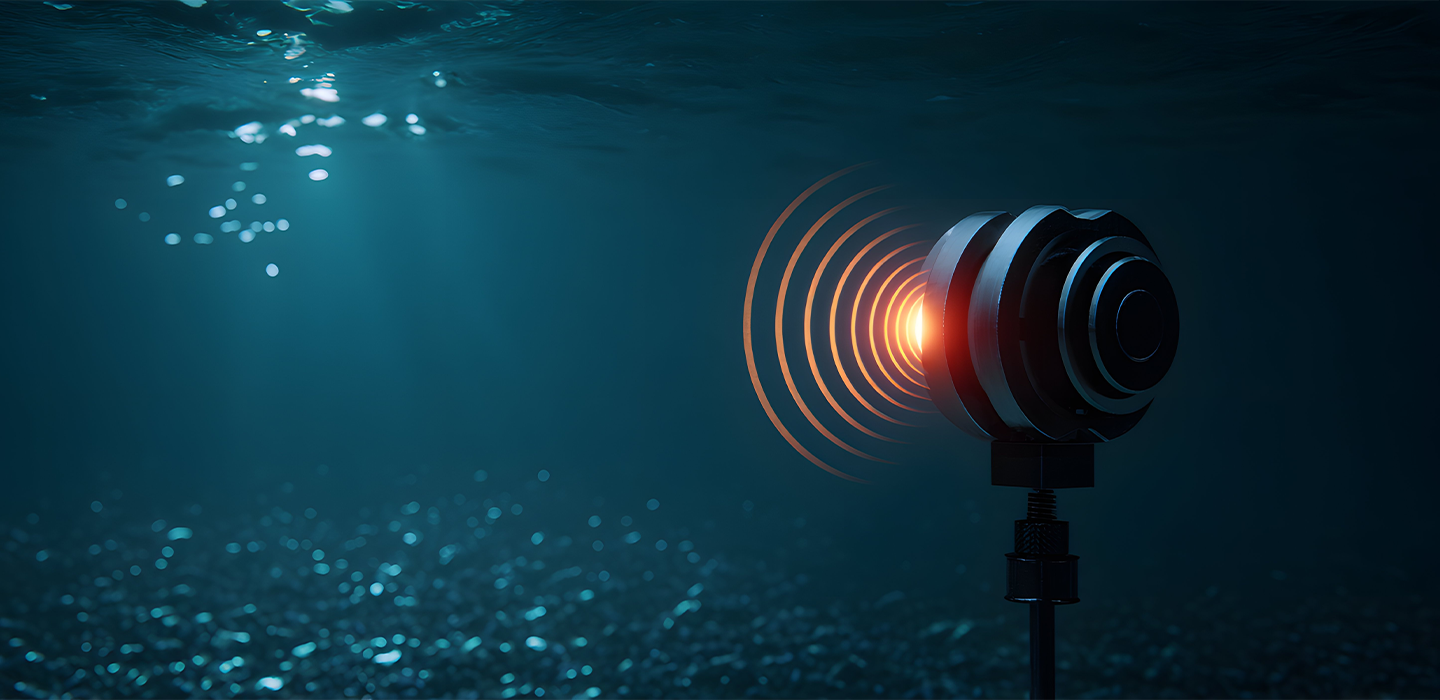
What is an acoustic vector sensor?
An acoustic vector sensor, also called a vector hydrophone, is a device that measures not only acoustic pressure (like a standard microphone or hydrophone) but also the particle velocity of sound in a medium, typically water or air.
By combining pressure and motion measurements, the sensor can both detect an acoustic signal and determine its direction of arrival.
Put simply:
It hears the sound, and knows where it’s coming from.
Why does vector sensing make a difference?
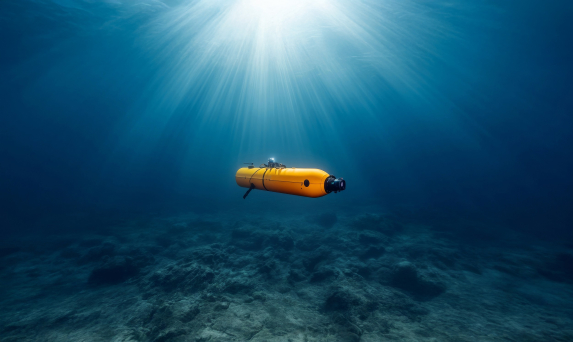
Not all hydrophones listen the same way—and that difference matters.
Conventional hydrophones capture only pressure, which means they can detect sound but not its origin.
Directional information changes everything. Unlike conventional hydrophones, an acoustic vector sensor can:
- Identify the true direction of incoming acoustic energy
- Significantly improve the signal-to-noise ratio
- Separate useful signals from ambient noise and reflections
This makes vector hydrophones especially effective in complex or noisy environments, situations where conventional sensing reaches its limits.
What is a vector hydrophone used for?
Acoustic vector sensors are used in applications where accuracy, reliability, and confidence are essential, including:
- Subsurface and geophysical monitoring
- Infrastructure and asset-integrity monitoring
- Leak detection and flow monitoring
- Environmental and underwater acoustics
- Security, surveillance, and perimeter monitoring
By providing both amplitude and direction, vector hydrophones enable faster detection, clearer interpretation, and better decision-making.
Because directional information is captured directly at the sensor level, you can move from raw data to actionable insight more quickly:
- Ambiguity is reduced
- Processing becomes more efficient
- Interpretation is faster and more robust
In short, vector sensing transforms acoustic data into actionable intelligence.
Turning acoustic data into true insight
Speak with an expert and explore what vector sensing can do for you.