
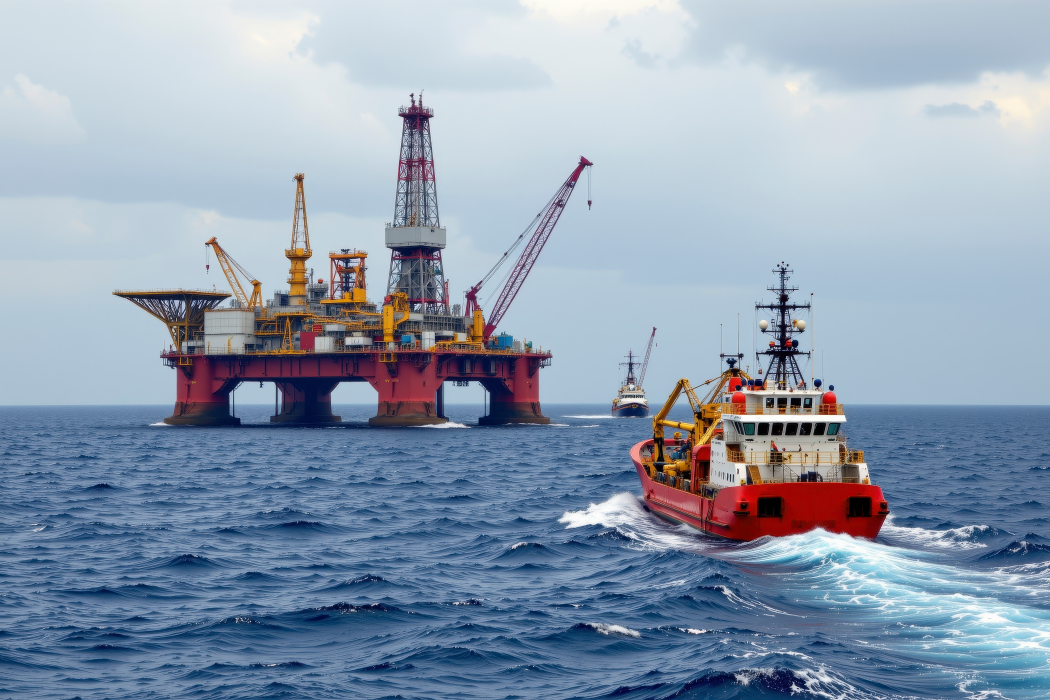
Offshore Logistics in Oil & Gas and Why ESG Now Lives in Operations
In offshore oil and gas, plans are elegant things. They sit neatly in schedules, vessel line-ups, weather forecasts, and cost models. They assume alignment between ports, vessels, platforms, crews, and regulators. They are approved with confidence. Then offshore operations begin. This is where offshore logistics stop being a planning exercise and becomes a live operational discipline.
The Reality Gap Offshore
Offshore logistics operate in a constantly shifting environment:
- Weather windows change
- Vessels are delayed or reassigned
- Port congestion creates knock-on effects
- Offshore activities overrun
- Safety, regulatory, and commercial priorities compete in real time
None of this is new. What is new is the scale, cost, and scrutiny attached to these deviations, particularly as the industry faces increasing pressure to operate more efficiently, more safely, and more sustainably.
Planning Is not the Problem
The industry does not suffer from a lack of planning tools. What it lacks is real-time operational awareness once the plan meets reality.
Most logistics systems are still heavily plan-centric:
- Static schedules
- Siloed data
- Limited visibility once vessels leave port
- Decisions made reactively, often too late to prevent inefficiency
When deviations occur, which they always do, teams are forced into firefighting mode.
Where Marlin Changes the Equation
Marlin was built for this exact moment: the point where execution diverges from plan.
Rather than replacing planning systems, Marlin acts as the operational mainframe that connects what was planned with what is actually happening offshore.

This is delivered through:
- Real-time vessel tracking using AIS and other sensors
- Virtual geofencing around ports, platforms, rigs, and exclusion zones
- Rule-based alerts when operational boundaries are breached
- A live logistics view across vessels, assets, and activities
Marlin gives offshore and onshore teams a shared operational truth.
This allows teams to:
- Identify inefficiencies as they emerge, not after the fact
- Understand the downstream impact of small delays
- Reprioritize vessels and activities dynamically
- Reduce waiting time, unnecessary steaming, and duplication
In short, Marlin enables logistics teams to manage by exception, not by constant intervention.
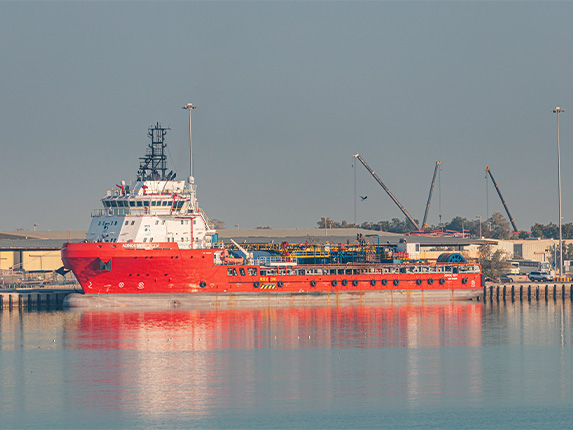
ESG is No Longer a Reporting Exercise
This is where ESG becomes real.
In offshore logistics, ESG outcomes are not delivered through policy statements. They are delivered through operational behaviour.
Every unnecessary mile steamed, every hour of waiting on weather or berth, and every poorly sequenced voyage has a direct impact on: fuel consumption, emissions, cost, safety exposure
By improving real-time visibility and decision-making, Marlin directly supports:
- Reduced fuel burn through better routing and vessel utilization
- Lower emissions by minimising idle time and avoidable miles
- Improved safety through clearer operational boundaries and alerts
- Better governance via auditable, data-driven operational decisions
ESG, in this context, is not an add-on. It is a by-product of better logistics execution.
Planning for Reality, Not Perfection
The offshore operators that will outperform over the next decade will not be those with the most detailed plans, but those with the greatest ability to adapt safely and efficiently when conditions change.
That requires:
- Real-time operational awareness
- Systems designed for deviation
- Technology that supports human decision-making, not replaces it
Marlin sits exactly at that intersection where plans meet reality, and where operational excellence quietly delivers ESG outcomes without slowing the operation down.
Because offshore logistics will never be perfect.
But it can be visible, controlled, and continuously optimized.

SAFER & SMARTER MANAGEMENT
OF MARITIME OPERATIONS
You want to discover more about Marlin?